Izu Peninsula: Itinerary for Japan’s hidden travel gem
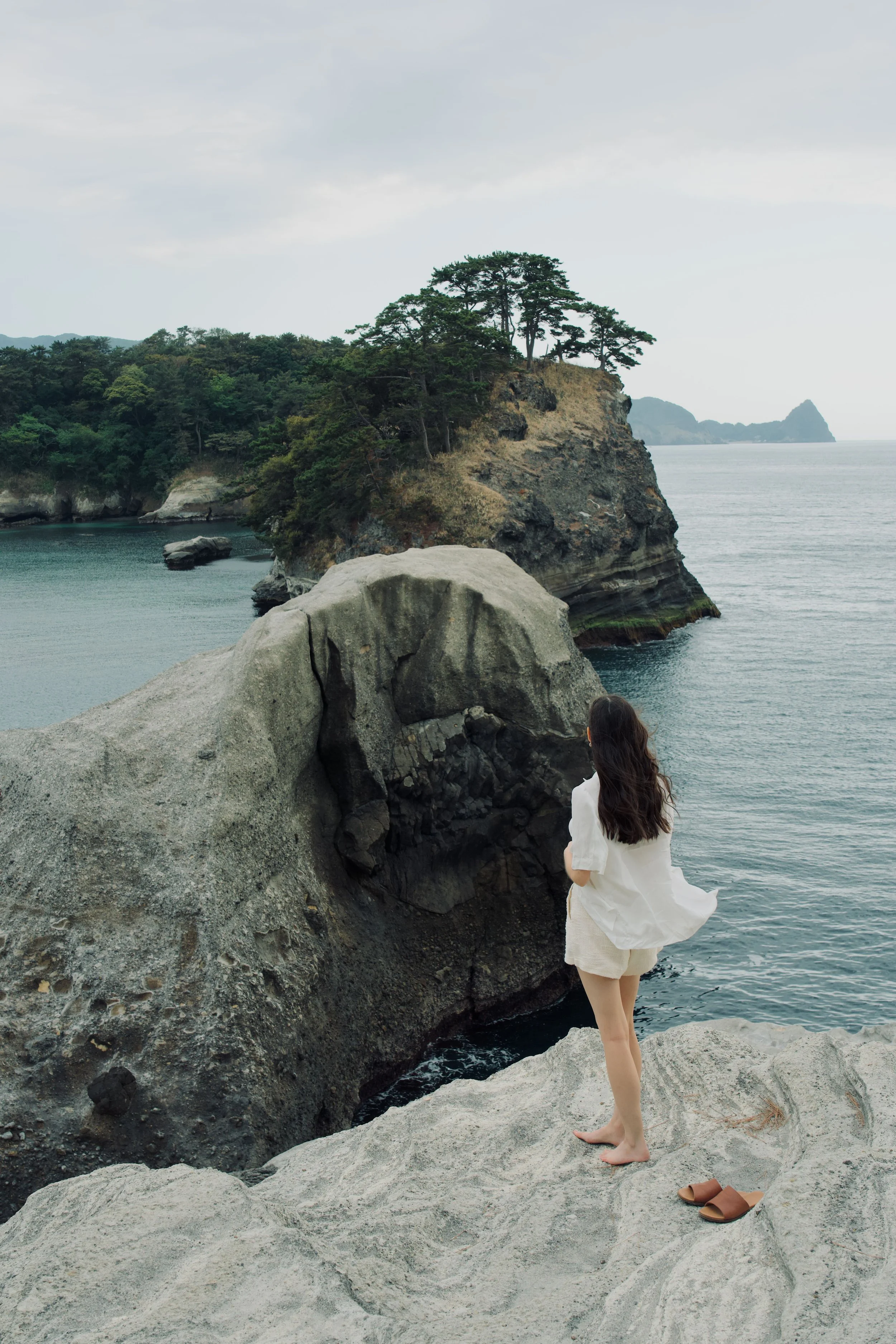
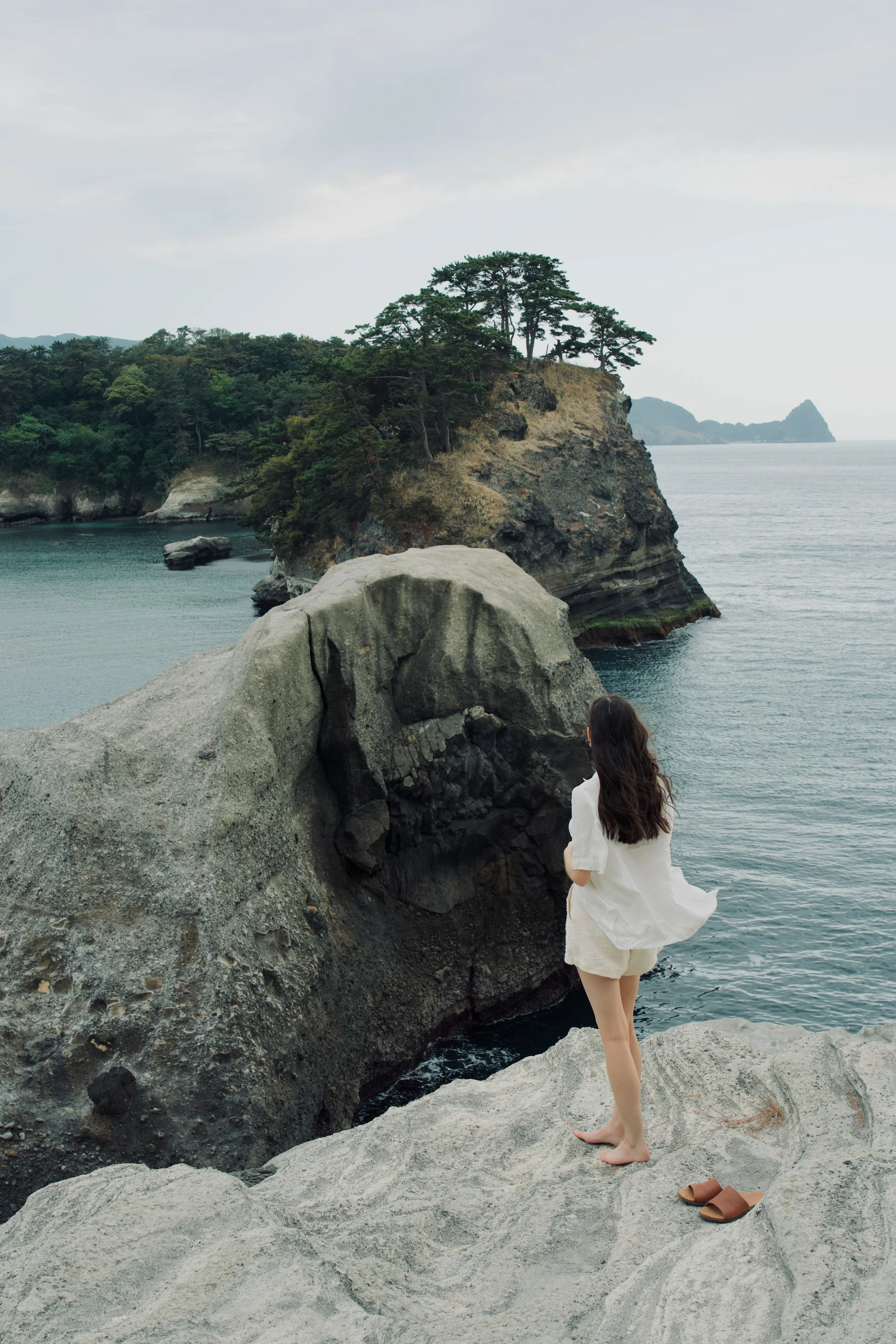
Cliffs of the Dogashima Coast, Izu Peninsula
The Izu Peninsula is one of Japan’s most underrated travel destinations. Although it’s easily reached from Tokyo and Osaka, it feels like a whole world away, with peaceful inland forests and quiet coastal towns. We couldn’t believe how tranquil and uncrowded it was, even during Japan’s busiest holiday season.
Each part of Izu has its own unique character. We stayed in hotels and ryokans on each side of the peninsula and used them as a base to explore.
In this guide, we've put together everything you need to plan the perfect Izu Peninsula itinerary, including the best places to visit, where to stay, and how to make the most of your trip.
Contents
Tips for planning a trip to Izu Peninsula, Japan
Why visit the Izu Peninsula
How to get to the Izu Peninsula (by train, bus or car)
The best time of year to visit the Izu Peninsula
Mobile data in Japan
Tours to the Izu Peninsula
Note: This post contains affiliate links. If you book similar experiences, we may earn a small commission at no additional cost to you which helps support our free guides.
Tips for travelling to Izue Peninsula, Japan
Why visit the Izu Peninsula
While some of Japan’s most famous destinations become more crowded each year, the Izu Peninsula offers a slower and more peaceful alternative to your Japan itinerary. In Izu, you can completely immerse yourself in Japan’s natural landscapes and enjoy its beaches, forests and volcanoes without any of the crowds of Tokyo or Kyoto. There are incredible hotels and ryokans all over Izu, and traditional Japanese cafes and restaurants in every small town. After a week-long road trip around the Izu Peninsula, we felt it was the most peaceful and immersive experience of Japan we’ve had of the many times we’ve travelled there.
How to get to the Izu Peninsula
The Izu Peninsula is easily reached from Tokyo, making it a great destination for a weekend getaway or short road trip. While the peninsula has two railway lines and a network of local buses, renting a car is the best way to explore Izu. We’d really recommend renting a car as many of the peninsula's most scenic coastal viewpoints, hidden beaches, waterfalls, and mountain attractions are difficult or time-consuming to reach by public transport. We also found driving in Japan to be very easy.
By train
The JR Tokaido Shinkansen has direct connections from Tokyo to Atami in around 40–50 minutes and Mishima in 45–60 minutes, both of which are convenient gateways to the peninsula.
If you're heading further south, the Odoriko and Saphir Odoriko limited express trains travel directly from Tokyo to Shimoda, stopping at Atami (around 80 minutes) and Ito (around 100 minutes) before reaching Shimoda in approximately 2 hours 40 minutes.
Local trains also serve the peninsula, although journeys are slower and often require transfers.
By car
If you’re planning to drive, we’d recommend booking a car in Japan through Rentalcars.com because it compares prices across all of the major hire companies. Note that even though you might hire a car through one of the usual major car hire companies, you may find that they operate through a local company once you get there. But other than the initial confusion of trying to find the right rental car company counter, this isn’t an issue at all.
You can check for available hire cars here:
The best time of year to visit the Izu Peninsula
The Izu Peninsula is a year-round destination. Summer is the most popular season if you are heading for the beaches. June is Japan’s rainy season, but July and August are still warm and ideal for swimming and diving.
Spring is also one of the most beautiful times to visit as cherry blossoms are in bloom. Kawazu is the best area for this in early February. Otherwise, autumn and winter are usually the clearest times for seeing Mount Fuji from the west coast.
Mobile data in Japan
We compared many mobile data plans for our trip to Japan and found the best option was Airalo’s Japan eSIM. Airalo has a range of plans, starting with 7 days. It’s the most convenient way to arrange data, as the amount can be tracked and topped up at any time in the Airalo app.
Tours to the Izu Peninsula
One of the easiest ways to explore the Izu Peninsula is by guided tour, especially if you are short on time or not planning to drive.
We’d recommend booking a tour through GetYourGuide as they offer the most options and flexibility in case your plans need to change. We have researched all of the options and would recommend checking out:
Private tour of the Izu Peninsula (up to five people)
Day trip from Tokyo to Mt Omuro and Jogasaki Coast (small group)
Overnight Izu Peninsula trip from Tokyo (note accommodation needs to be booked separately for this two day tour)
WHere to stay on the Izu Peninsula
We’ve separated this itinerary into four regions, depending on what you’d like to see:
mountains and hot springs in the north and centre,
volcanoes and cliffs to the east,
beaches for a coastal getaway in the south, and
chances to see Mount Fuji from the west.
We’ve included more accommodation options for each area below, but here is a quick list of our top recommendations for hotels and ryokans on the Izu Peninsula:
North Izu - Mizunomichi Kazenomichi Yugashima Tatsuta Hot Spring Ryokan: Traditional riverside ryokan with natural hot springs, from around AUD $300 per night.
South Izu - Shimoda Tokyu Hotel: Seaside resort with ocean views, an open-air hot spring, and pool, from around AUD $350 per night.
East Izu - Kamenoi Hotel: Modern onsen hotel with infinity-style ocean views, from around AUD $450 per night.
West Izu - Fugaku Gunjo: Luxury boutique ryokan with private open-air baths and spectacular Mount Fuji views across Suruga Bay, from around AUD $1300 per night.
While the Izu Peninsula is less-travelled than other destinations in Japan, the best hotels and ryokans are usually boutiques with only a small number of rooms. Some stays are also only available to book on certain platforms, which we’ve included below. We’d recommend booking your accommodation on the Izu Peninsula ahead of your trip through Agoda or Booking.com as they usually have the most flexible cancellation policy in case plans change.
The most tranquil Izu Peninsula itinerary
North Izu
Mountains and Hot Springs
The north of Izu is one of the most peaceful places to enjoy onsens surrounded by lush forests, rivers and waterfalls. One of Izu’s most famous hot spring towns is called Shuzenji Onsen. It has historical temples, a peaceful bamboo forest path and many preserved streets, cafes and small shops along the Katsura River.
We’d also recommend visiting Joren Falls, a 25 metre waterfall that can be reached in just a short, paved walk through the forest. The falls are located in the Amagi Mountains which can be seen through the Amagi Pass, either by driving through the scenic mountain route or following walking trails in the area like Old Amagi Road.
If you continue travelling around Izu to the east or south coast, we’d also recommend stopping at the Kawazu Seven Waterfalls. They are connected by a walking trail that takes around one to two hours and passes many cascading waterfalls. After walking to each of the waterfalls here, we visited the open-air onsen next to Odaru Falls which was a beautiful place to bathe.
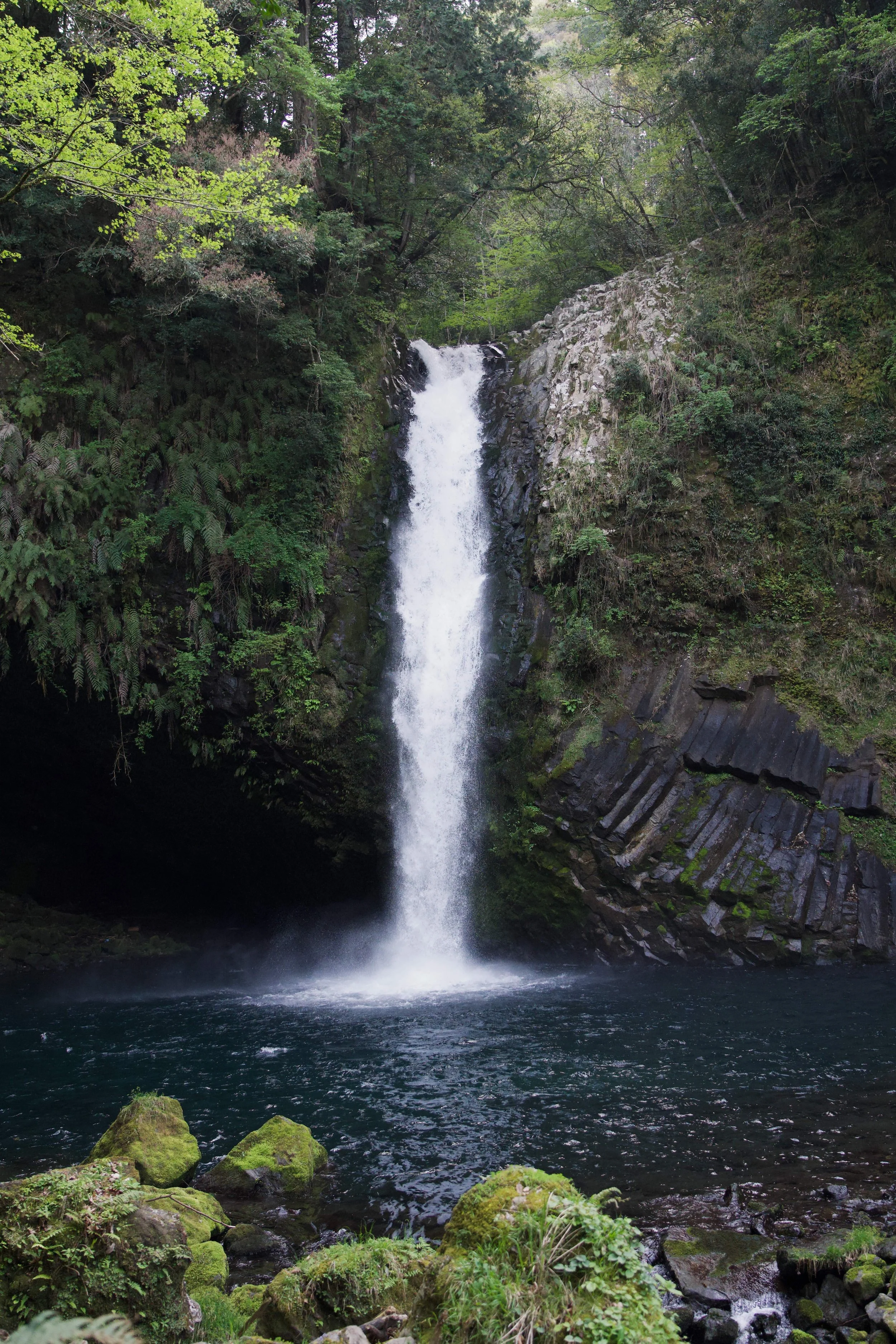
Viewpoint of Joren Falls, Izu Peninsula
Where to stay in North Izu
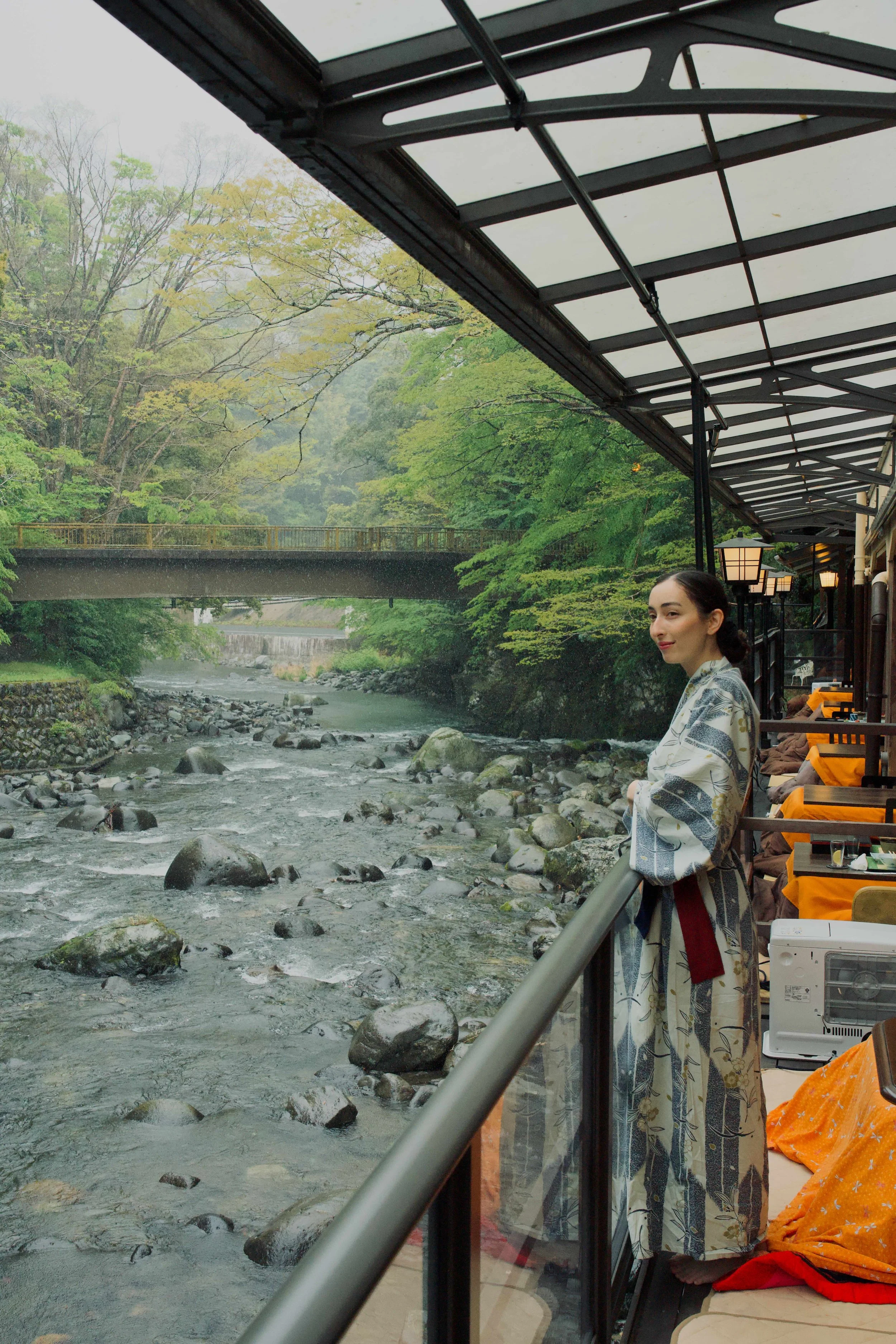
If you’re looking to completely relax on the Izu Peninsula, we highly recommend staying at Mizunomichi Kazenomichi Yugashima Tatsuta Hot Spring Ryokan, a traditional ryokan in the forest. Some rooms have open-air hot spring baths and the hotel also offers seasonal kaiseki meals next to a rushing stream.
Rooms at Mizunomichi Kazenomichi Yugashima Tatsuta Hot Spring Ryokan can start from AUD $300 per night. Larger rooms with open-air baths beside the river and breakfast included can start from AUD $500. We loved our stay here and got to experience a quieter, more traditional side of the Izu Peninsula.
Other accommodation options on the north of Izu can be found in Yugashima, Shuzenji or Izu city. We’d recommend checking out:
Ochiairo (Yugashima): A luxury historic ryokan dating back over 140 years, known for its beautiful architecture and cave-style hot springs (from AUD $1800 per night, Michelin Key property).
Izu Marriott Hotel (Shuzenji): A modern resort-style hotel with private onsens, golf, tennis and family-friendly facilities in the forests of Shuzenji (from AUD $400 per night).
Yukairou Kikuya (Shuzenji): A traditional ryokan dating back 400 years with picturesque courtyards and corridors and multiple private onsens (from AUD $390 per night).
Kouyurou Ikawa Ryokan (Izunokuni-city): A contemporary Japanese design where you can reserve private hot spring baths (from AUD $250 per night).
East Izu
volcanoes and cliffs
The east coast of the Izu Peninsula is the best place for nature lovers with rugged volcanic coastlines and some of the most iconic landscapes on the peninsula. While you’re staying on the east coast, we’d recommend visiting the Jogasaki Coast to see the lava cliffs.
Mount Omuro is an unassuming extinct volcano where you can take a short chairlift up to its mouth, and circumnavigate around it for about half an hour of panoramic views. On clear days, you’ll be able to see Mount Fuji from here. The small towns of Ito and Atami are also worth exploring for their hot springs, fresh seafood, and relaxed coastal atmosphere.
Where to stay in East Izu
Izu Kogen is the perfect base to explore the east side of the Izu Peninsula. We’d recommend staying at the Kamenoi Hotel, which is a very modern onsen hotel with infinity-style ocean views. Rooms start from around AUD $450 per night, and some also offer private balconies or terraces overlooking the Pacific Ocean. If you’re getting to the peninsula by public transport, Kamenoi Hotel offers a free shuttle service from the station.
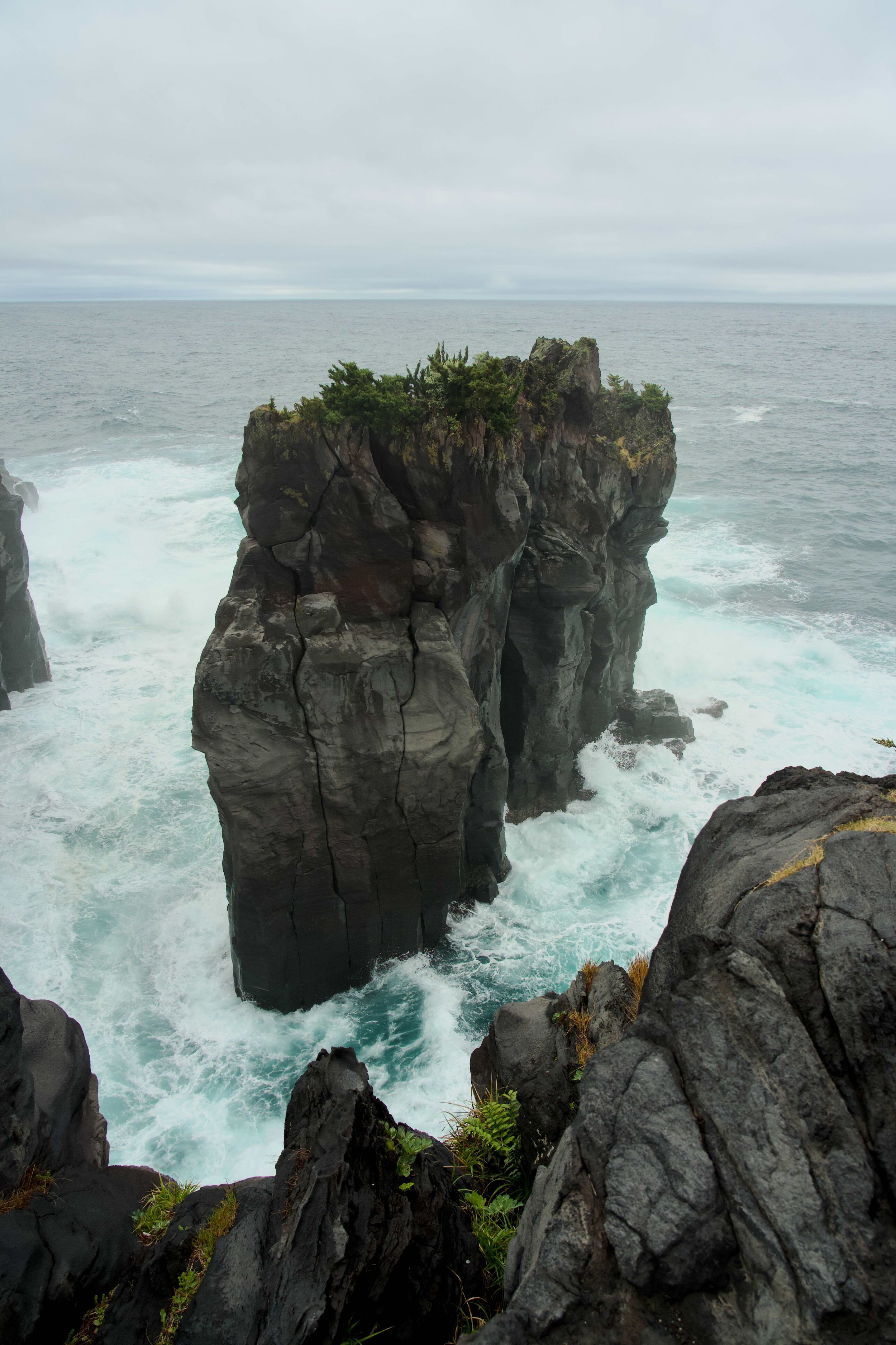
Rocks on the Jogasaki Coast, Izu Peninsula
South Izu
coastal getaway
If you’re looking for a beach getaway, South Izu is the perfect destination with crystal-clear turquoise waters. Shirahama Beach is one of the most beautiful white-sand beaches in Japan and a very popular place for swimming in summer. If you keep travelling south, Cape Irozaki is the southernmost point of the peninsula with a beautiful lookout from the lighthouse. We spent a day just following the coastline here and it was one of the most relaxed and surreal experiences of our time in Japan.
Where to stay in south Izu
Shimoda and Kawazu are the best places to stay while visiting the southern beaches of the Izu Peninsula. We’d recommend staying at the seaside resort of Shimoda Tokyu Hotel for its location and sunrise views. Rooms at Shimoda Tokyu Hotel start from AUD $350 per night and offer ocean views, as well as a scenic open-air hot spring and pool.
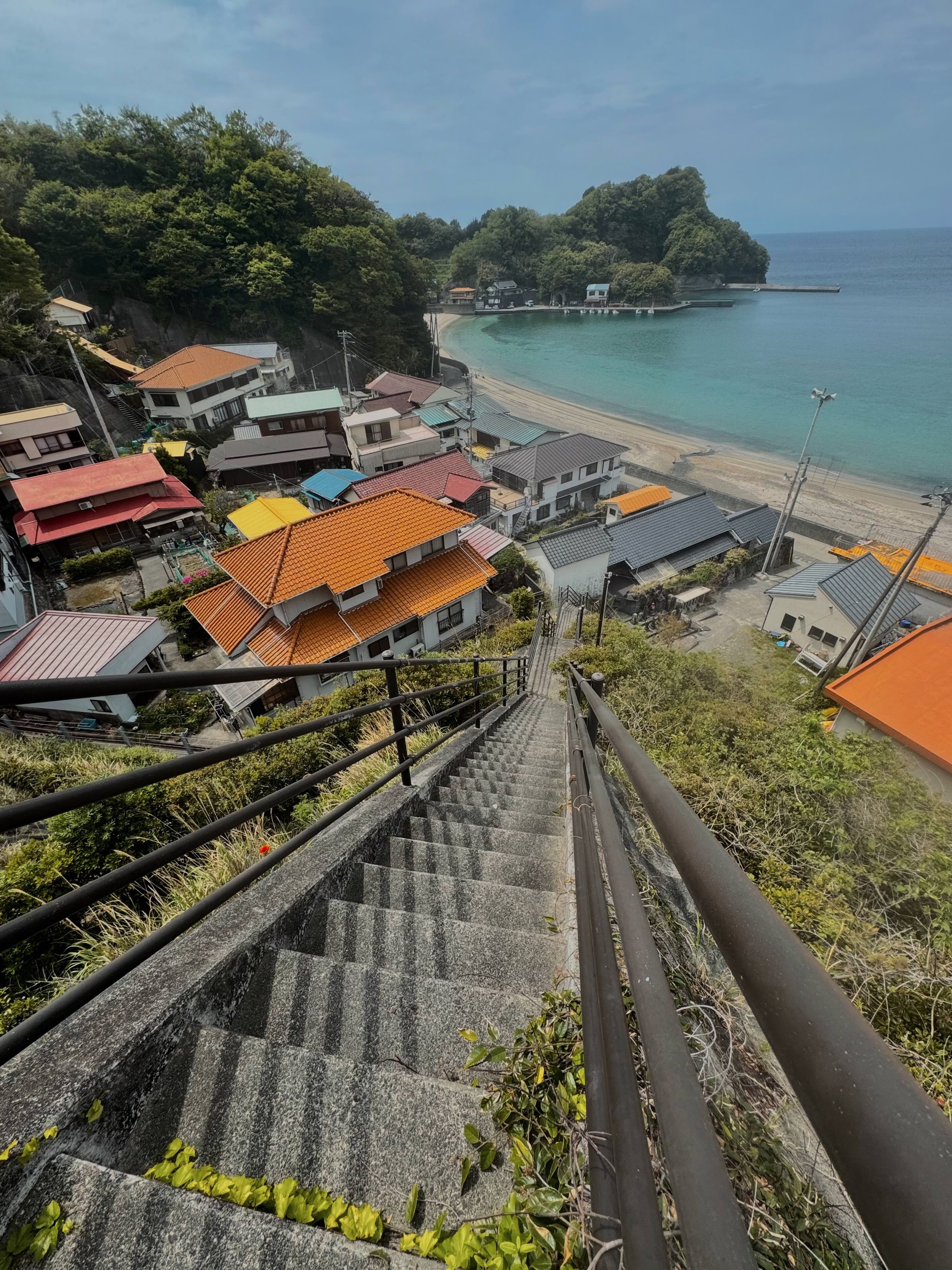
Iwachi Beach, on the coastal drive from east to south Izu
West Izu
The best place to see Mount Fuji
If you’re lucky, Mount Fuji can be seen across the water from the west coast of the Izu Peninsula. The most iconic views of Mount Fuji are from Koganezaki Cape, Koibito Misaki (Lovers’ Cape) or Kumomi Shore.
The peak is only visible for around one third of the year and it needs the right conditions. On our trip in early May, we were able to see it on just 2 days out of the 10 we were in the area. We’d recommend booking a few extra nights in the area to increase your chances, and heading outside in the early morning or late afternoon.
On the west side of Izu we’d also recommend visiting the Dogashima Coast, which was one of our favourite areas on the Izu Peninsula. It is home to a very rugged coastline with unique rock formations and cliffs. Boat tours run into the famous Blue Cave where you can see striking, clear water.
Where to stay in WEst Izu
Toi Onsen and Nishi-Izu are the best places to stay on the west coast of Izu. In Toi, Fugaku Gunjo is one of the most spectacular boutique resorts with views of Suruga Bay and Mount Fuji. This luxury resort only has a handful of suites around AUD $1300 per night with private open-air baths.
In Nishi-Izu, we stayed at Il Azzurri Nishina which had the most beautiful sunset view. We loved sitting in the outdoor foot spa (with free drinks and snacks!) and watching the sun set below the horizon. Rooms at Il Azzurri Nishina all have ocean views, starting from AUD $550 per night. Some rooms also include a private sauna. Another option in Nishi-Izu is Mayu Futahari, an exclusive ryokan that overlooks Dogashima, featuring private open-air baths and kaiseki dining. Rooms at Mayu Futahari start from AUD $900 per night.
Cliffs of the Dogashima Coast, Izu Peninsula